- Look for the token name that you have received in your Wallet.
-
Now, let's find the token details on block explorer
Use the appropriate blockc explorer based on the network the token was sent on:- BscScan — for BNB Smart Chain (BSC) tokens
- Etherscan — for Ethereum and ERC-20 tokens
- PolygonScan — for Polygon tokens
- Solscan (Solana)
- DexScreener (multi-chain market views)
- Ton.scan for GRAM tokens
- Token Sniffer (risk signals for some EVM tokens)
-
Other explorers may be available depending on the blockchain network.
Best practice is to cross-check the token address using two sources, such as an official project channel plus a block explorer.
-
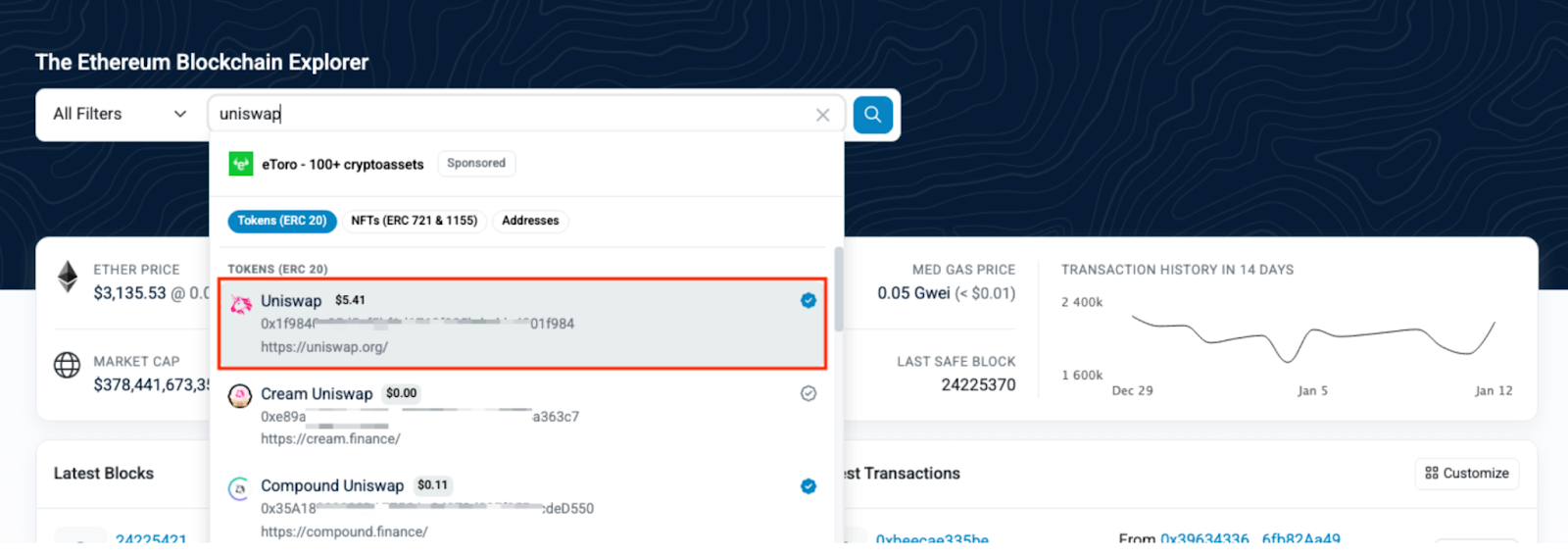
Search for the token.
Enter the token name, symbol, or keyword such as “Uniswap” or “UNI”.
Popular and trending tokens often have multiple lookalikes, so carefully review the search results before selecting one.
-
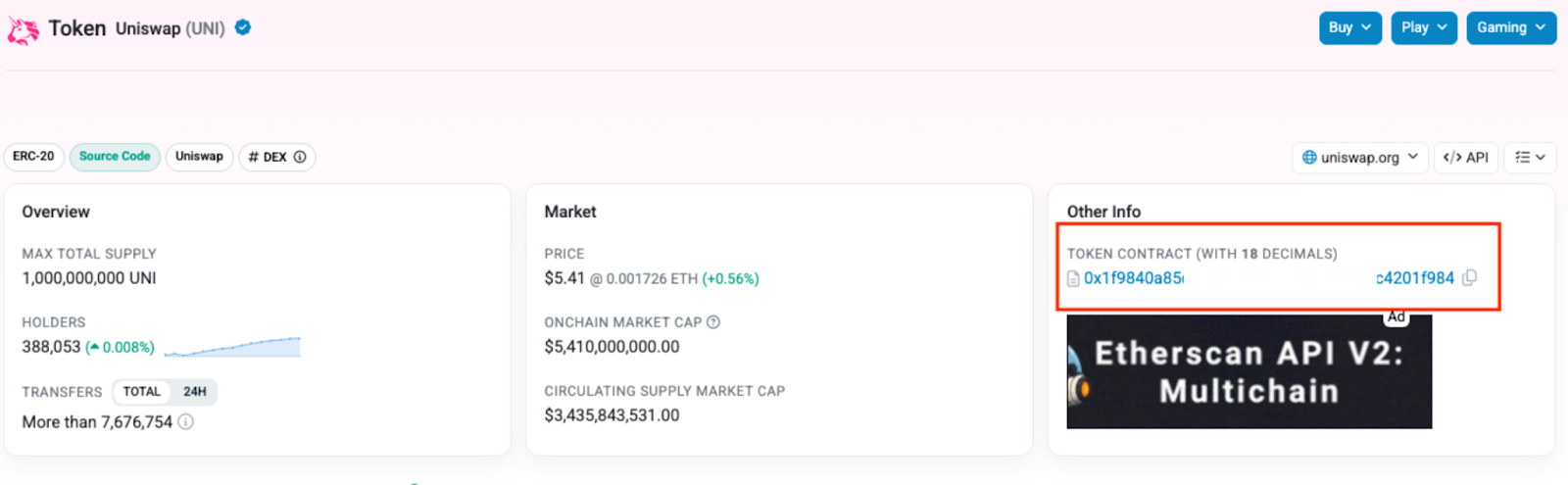
Open the token page and find the address (if you searching by the name)
- On EVM networks, check the token contract address.
-
On Solana, check the token address (mint address).
-
Compare contract address of received token and the officail one
Check how to find your contract address: What Is a token Contract address?
Copy the contract address and cross-check it against the address shown in the transaction you received. If the addresses do not match, treat this as a red flag and do not interact with the token.
-
Additionally, review token Price, Market cap (the rotation in market) and the amount of holders.
If a token is held by only a small number of users, shows 0 value, has no reported circulating supply or market cap, or shows little to no trading activity, it may be an inactive or fake token impersonating a legitimate project.
-
Look for any potential warning signs
- Security alerts or warnings
- The token has not been verified or validated
- The displayed value is 0
Why the token name is not enough?
A token’s name, ticker, logo, or even a contract address that looks familiar does not guarantee that the token is legitimate or safe to trade.
Before interacting with a token, consider that:
- The contract may be fake: Scammers can copy the name, symbol, and branding of legitimate tokens.
- The contract or project may be migrated, outdated, or compromised: Security incidents can affect tokens or their associated smart contracts. What Is a token Contract address?
- The token may have little or no liquidity. How to identify fake, low liquidity, or no value token?
- Trading may be restricted: Some tokens may allow purchases but prevent or limit selling.